Same-day appointments available.  Book now
ServicesAboutMeet the TeamPricingContactYoga Book Appointment

Blood Flow
Restriction (BFR)

Build muscle strength with a fraction of the weight. BFR training uses a specialized cuff to safely restrict venous blood flow during low-load exercise — producing strength and muscle gains that normally require heavy resistance training.

Post-Surgical StrengthMuscle PreservationLow-Load TrainingOlder AdultsACL Rehab
20%

of 1-rep max required — vs. 70–80% recommended by ACSM for traditional strength and hypertrophy

290×

increase in growth hormone after a single BFR session (Takarada et al., Journal of Applied Physiology, 2000)

0.04%

complication rate across 63,484 surgical tourniquet cases — BFR uses far less pressure and a fraction of the time

How It Works

Maximum stimulus.
Minimum load.

Blood Flow Restriction training uses a pneumatic cuff — like a blood pressure cuff but applied to the upper arm or thigh — to partially restrict the venous outflow of blood from the muscle being exercised. Arterial flow continues normally; it's the return flow that's temporarily slowed.

This creates metabolic stress and muscle cell swelling within the working muscle. The body responds as if it's lifting much heavier weight — releasing growth hormone, recruiting fast-twitch muscle fibers, and triggering the same anabolic signaling pathways that heavy resistance training would. The result: meaningful strength and muscle gains at loads of just 20–30% of your maximum — low enough to be safe immediately after surgery or injury.

At Cowboy Healthcare, BFR cuffs are applied and monitored by your DPT. We set limb occlusion pressure precisely for your limb circumference — this is not a general inflated cuff protocol. Precision matters for both safety and efficacy.
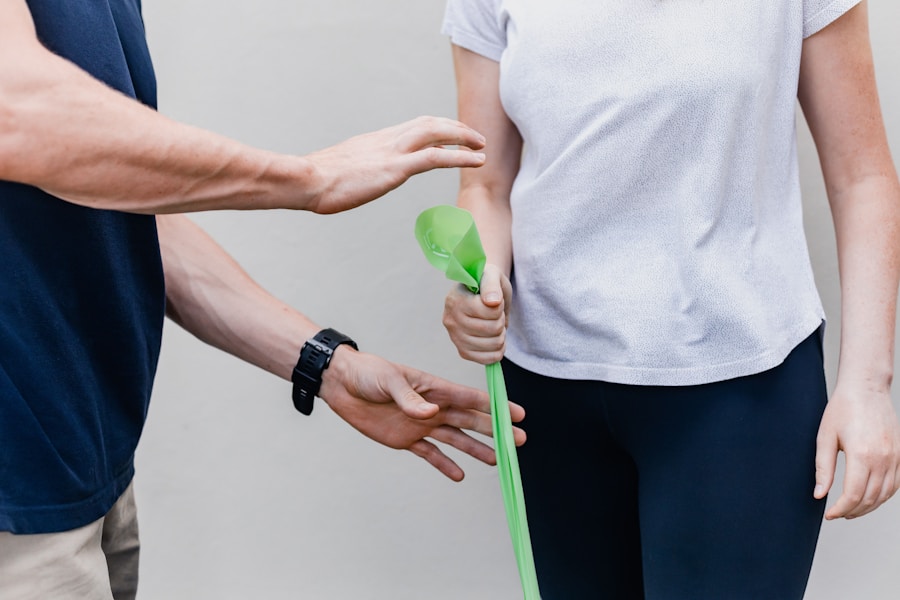
Blood flow restriction training
Clinical Evidence

The science behind
the cuff

Origins: Battlefield Medicine

BFR was first developed by Johnny Owens, PT, at Brooke Army Medical Center to rebuild limb strength in wounded warriors — soldiers whose injuries made traditional resistance training impossible. The protocol has since been validated across orthopedic, cardiac, and sports rehabilitation.

Hormonal & Anabolic Response

A single session of BFR exercise triggers a 290-fold increase in growth hormone above baseline (Takarada et al., 2000). The hypoxic environment recruits fast-twitch fibers and activates the mTOR pathway — the primary driver of muscle protein synthesis. Research also shows a 3-fold increase in ribosomal protein S6 kinase beta-1, a direct marker of muscle hypertrophy signaling (Fujita et al., 2007).

Preventing Disuse Atrophy

Muscle begins to atrophy within just 5 days of immobilisation (Wall et al., 2014). In patients immobilised for 2 weeks, BFR produced significantly less strength loss than both non-active controls and isometric exercise alone. In ACL reconstruction patients, BFR limited quadriceps loss to 9.4% vs. 20.7% in the control group (Takarada et al., 2000) — nearly half the atrophy.

Safety: Extensively Studied

Surgical tourniquets inflated over 100 mmHg above systolic pressure for up to 2 hours carry a complication rate of just 0.04% across 63,484 procedures (Odinsson & Finsen, 2006). BFR training uses lower pressure for only 10–15 minutes — roughly one-eighth of surgical time. Clark et al. (2011) found no change in vascular stiffness, D-Dimer, or nerve conduction following BFR. Loenneke et al.'s systematic review confirmed BFR is safe across all ages and training levels when supervised by trained professionals.

Aerobic Benefits

BFR aerobic training is typically performed at just 20–40% of VO2 max via walking or cycling. After 3 weeks of BFR walking twice daily, subjects showed significant improvement in lower extremity size and strength vs. identical training without BFR (Abe et al., 2009). A 15-minute BFR cycling program produced a 6.4% improvement in VO2 max — something that 40 minutes of equivalent conventional cycling failed to achieve (Abe et al., 2010).

Bone Health

BFR training has also shown benefit for bone density. Studies report a significant reduction in bone resorption markers and a 21% increase in serum bone-specific alkaline phosphatase — a marker of bone formation — in older male subjects vs. low-intensity exercise alone. The proposed mechanism involves increased interstitial fluid flow-induced shear stress within the osteocyte membrane (Loenneke et al., 2012).

Key references: Takarada Y et al. (2000) J Appl Physiol; Fujita S et al. (2007) J Appl Physiol; Wall BT et al. (2014) Acta Physiol; Odinsson A & Finsen V (2006) J Bone Joint Surg Br; Clark BC et al. (2011) Scand J Med Sci Sports; Loenneke JP et al. (2011, 2012) Scand J Med Sci Sports / Eur J Appl Physiol; Abe T et al. (2009, 2010) Int J KAATSU Train Res / J Sports Sci Med.

Who Benefits Most

When you can't load
but must get strong

Post-ACL Surgery

Quadriceps inhibition and atrophy after ACL reconstruction is one of the biggest barriers to return to sport. BFR allows quad strengthening at loads safe for the healing graft — weeks earlier than traditional heavy loading.

Total Knee & Hip Replacement

Patients cannot lift heavy in the first weeks after joint replacement. BFR builds the quad and glute strength needed for gait and stair negotiation without stressing the new implant.

Rotator Cuff Repair

The shoulder is in a sling and load-restricted for weeks post-repair. BFR applied to the upper arm can preserve and build muscle in the restricted shoulder and the contralateral arm simultaneously.

Older Adults & Sarcopenia

Older patients who cannot safely perform high-load resistance training due to joint pain or medical conditions still achieve clinically significant muscle and strength gains through supervised BFR.

Bariatric Surgery Recovery

Post-bariatric patients need to build muscle as their weight decreases. BFR enables effective strength training without the joint stress that traditional resistance exercise would impose early in recovery.

Cardiac & Respiratory Patients

Patients whose cardiovascular or respiratory status limits exertion can achieve meaningful muscle stimulus through BFR at heart rates and exertion levels that remain within safe cardiac parameters.

Insurance

We accept your plan

BFR is applied as part of your physical therapy session and billed under your PT benefit. We accept Medicare, BCBS, UnitedHealthcare, Aetna, Cigna, Humana, GEHA, and more. Cash-pay options available.

Verify coverage →Cash-pay rates →
Patient Reviews

What our patients
are saying

★★★★★

"I had a total knee replacement and couldn't do heavy leg work early post-op. BFR training allowed me to rebuild my quad without stressing the new joint. My surgeon was impressed with my muscle recovery at the six-week mark."

Edward R. Post-Knee Replacement · March 2026
★★★★★

"Competitive cyclist with a tibial fracture — no loading for eight weeks. BFR sessions kept my legs from completely atrophying. My return to the bike was ten times smoother than my first fracture recovery ten years ago when I just rested."

Allison M. Bone Fracture Recovery · February 2026
★★★★★

"My DPT used BFR for my shoulder after rotator cuff surgery — I didn't know it could even be applied there. The strength response without heavy load was real. My surgical arm recovered almost as fast as my non-surgical side."

Derek C. Rotator Cuff Rehab · April 2026

Stronger. Faster.
Safer.

BFR is included in your PT session. Ask your therapist whether you're a candidate at your first evaluation.

Book a Free Evaluation