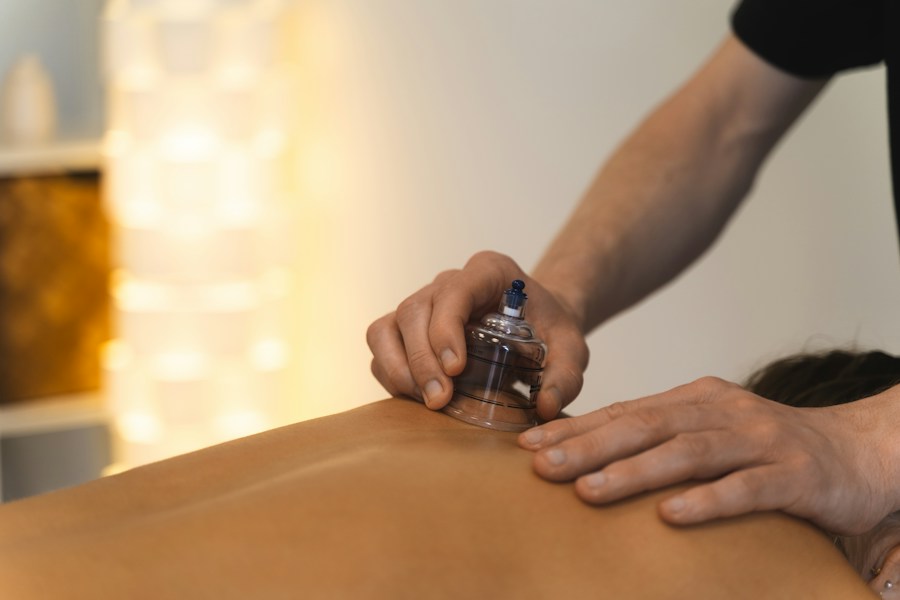
Clinical myofascial decompression using the Therabody TheraCup — combining suction, vibration, and heat to release restricted tissue, improve circulation, and accelerate recovery. Ancient technique, modern technology.
Traditional manual therapy — massage, foam rolling, instrument-assisted soft tissue mobilisation — compresses tissue. Cupping does the opposite: it uses suction to lift and decompress the layers of skin, fascia, and muscle, creating space that allows fresh blood flow, reduces adhesions, and releases restricted tissue.
In a clinical PT setting, cupping is called myofascial decompression (MFD) and is applied with precise intent to specific anatomical targets — not placed randomly across the back. We use it to address fascial restrictions, scar tissue, and chronically tight muscles that resist other forms of treatment.
The temporary circular marks it leaves (petechiae) are not bruises — they reflect the degree of stagnation and tissue restriction in that area, and they fade within a few days as circulation improves.
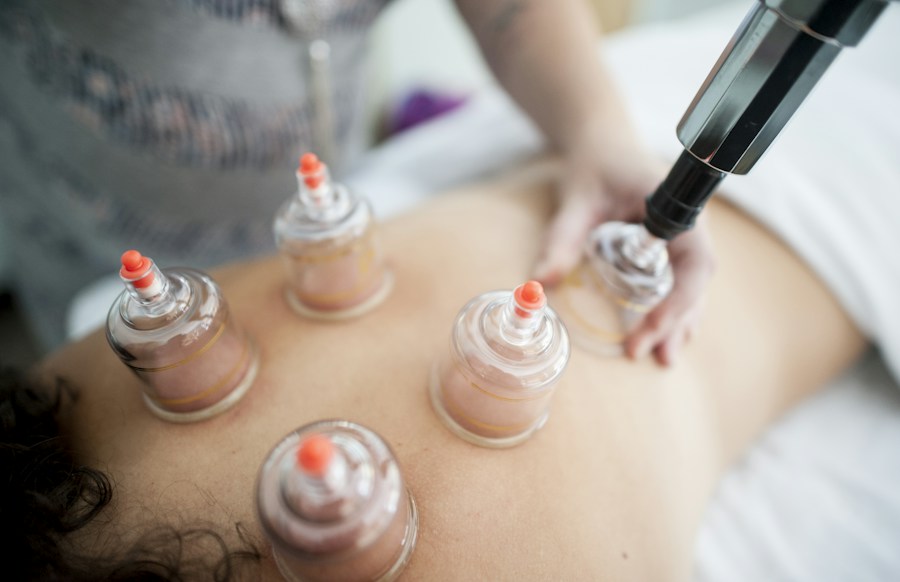
We use the Therabody TheraCup — the first smart cupping device that integrates suction, vibration, and heat in a single handheld unit. Unlike traditional static cups, the TheraCup allows active gliding across the tissue while maintaining suction, increasing the therapeutic reach of each treatment.
Chronically tight trapezius and rhomboids that resist massage and stretching respond rapidly to myofascial decompression — especially when combined with dry needling.
Cupping mobilises scar tissue adhesions that restrict mobility after surgery or injury. It's particularly effective for abdominal, knee, and shoulder scars.
Runners and cyclists with chronic lateral knee pain and quad tightness benefit from gliding cupping along the entire length of the IT band and quadriceps.
Plantar fasciitis and Achilles tendinopathy patients often have restricted calf fascia. Cupping opens those layers and allows therapeutic loading to be more effective.
Paraspinal muscle spasm that limits lumbar range of motion responds well to decompression cupping — often providing immediate relief that allows manipulation and exercise to proceed.
Between-session recovery cupping for athletes improves circulation to worked muscles, reduces delayed-onset muscle soreness, and accelerates readiness for the next training session.
Cupping is applied as part of your physical therapy session and billed under your PT benefit — not as a separate service. Cash-pay and drop-in options are also available for patients without insurance or who prefer out-of-pocket PT.
View cash-pay rates →"I was skeptical about cupping but my PT recommended it for my upper trap. After the first session the marks freaked me out but the tension was noticeably gone. Two more sessions and I was sleeping through the night without waking up with neck pain."
"I had knee surgery three years ago and the scar tissue was still causing problems. The combination of cupping and manual work they did broke up the adhesions in ways that nothing else had. My range of motion improved within a week."
"As a runner dealing with chronic IT band tightness, I'd tried everything. Cupping on my lateral quad and IT band completely changed my recovery between long runs. I get it done every couple of weeks now and it keeps me consistent."
Cupping is included in your standard PT session. Same-day appointments available.
Book a Session